
The Brethren of Branksome Avenue
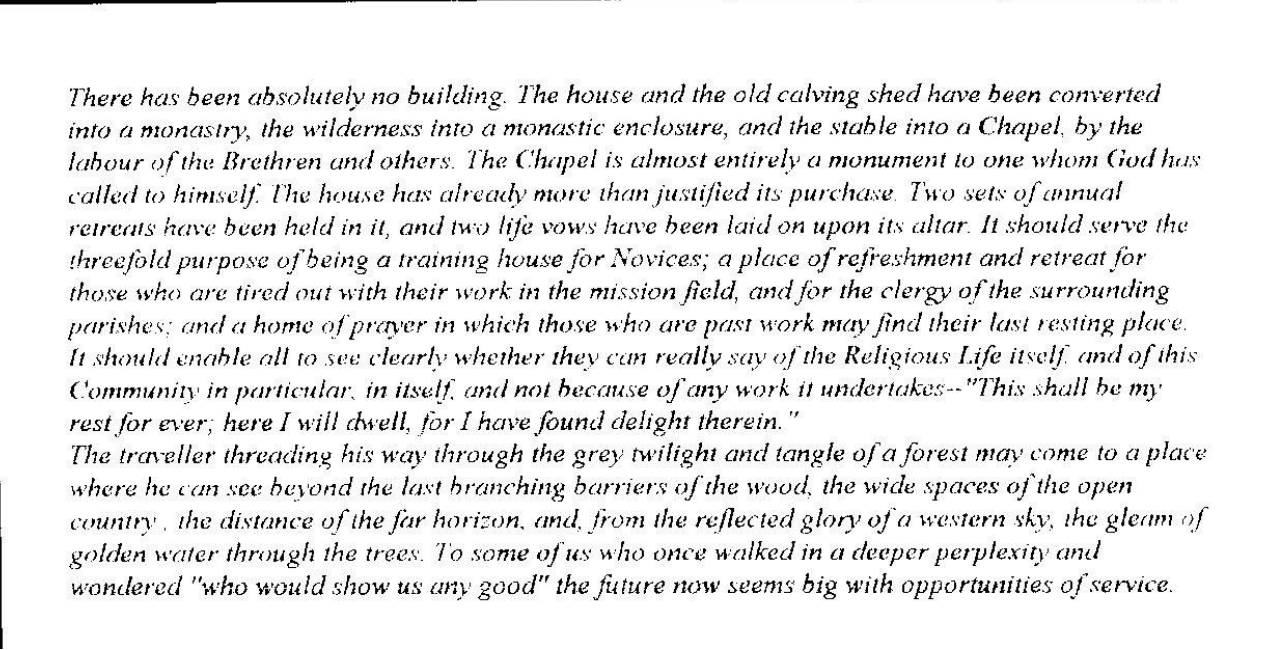
George Donovan 2008
It seems that here in this area of Essex, of which Stanford-Le-Hope is part, we have over past years cultivated a number of religious sects some of which, even in a fragmented form, still exists today. In Peter. F. Anson’s book ‘The Call of the Cloisters’, the author lists one hundred and eleven Anglican Religious Communities in the UK (1842-1952) of which 29 were for men, 82 for woman. In the neighbouring parish of Fobbing there are a number of burials entered in the burial register where, after the surname, ‘Peculiar People’ has been noted.
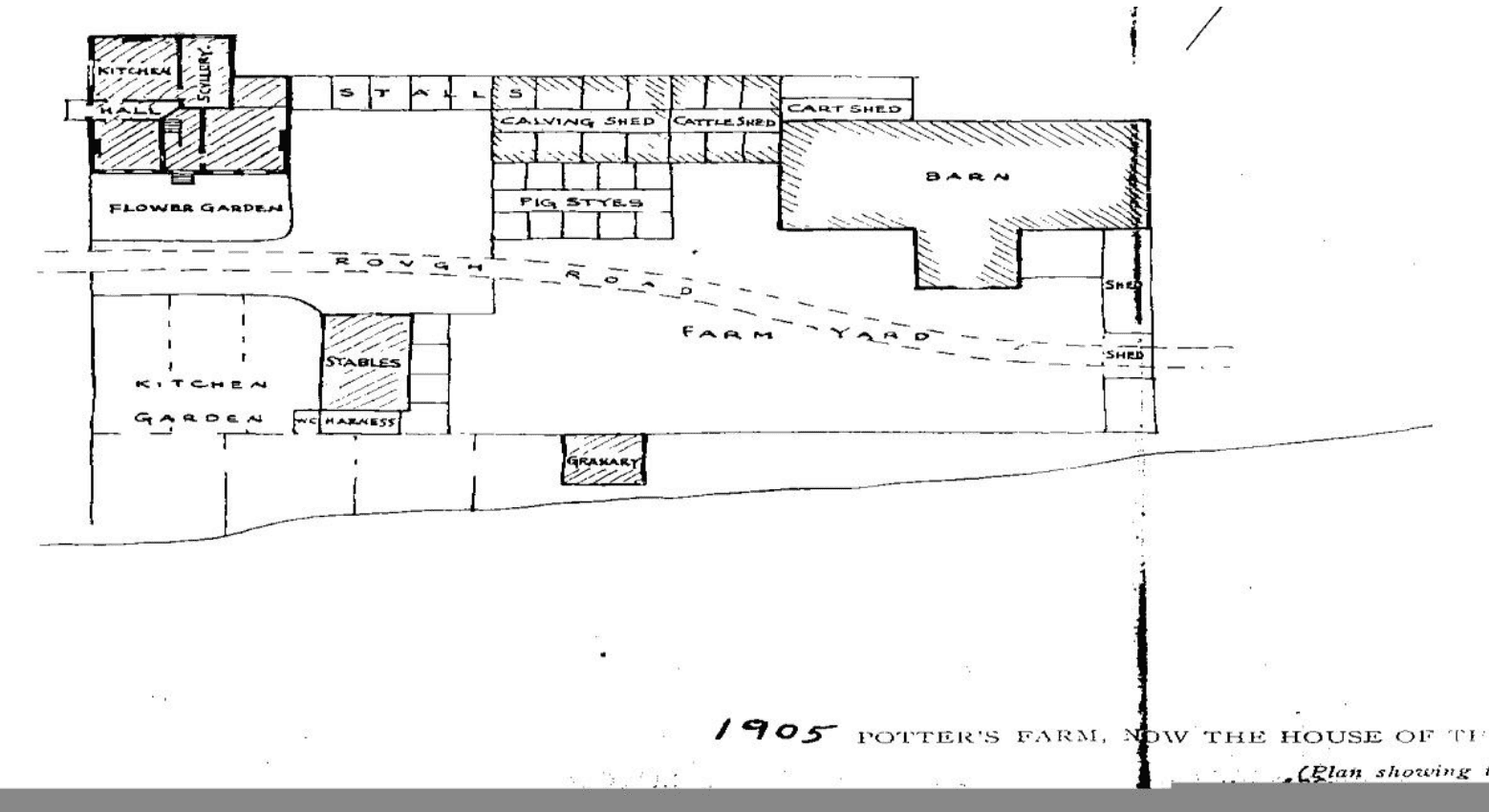
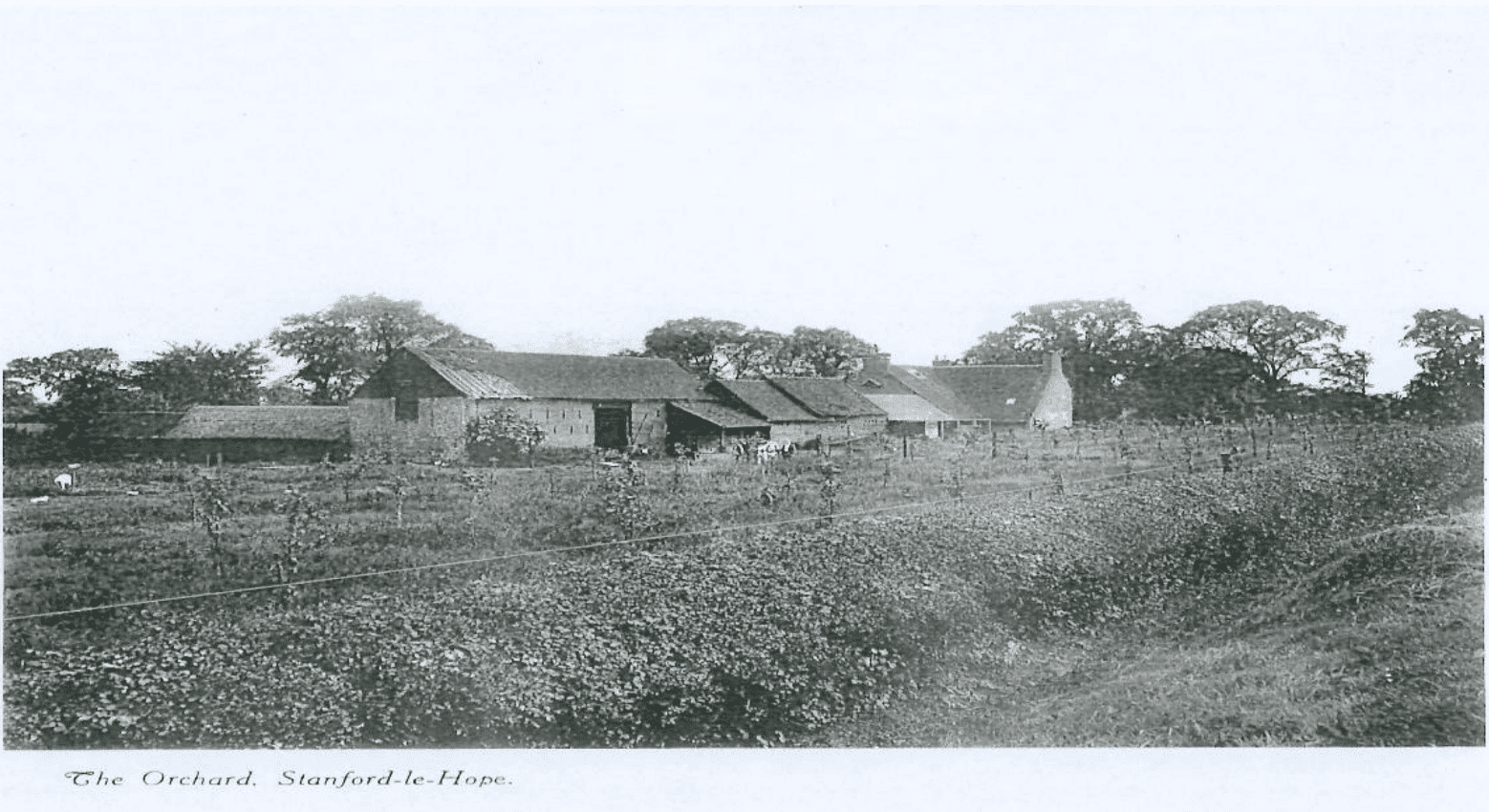
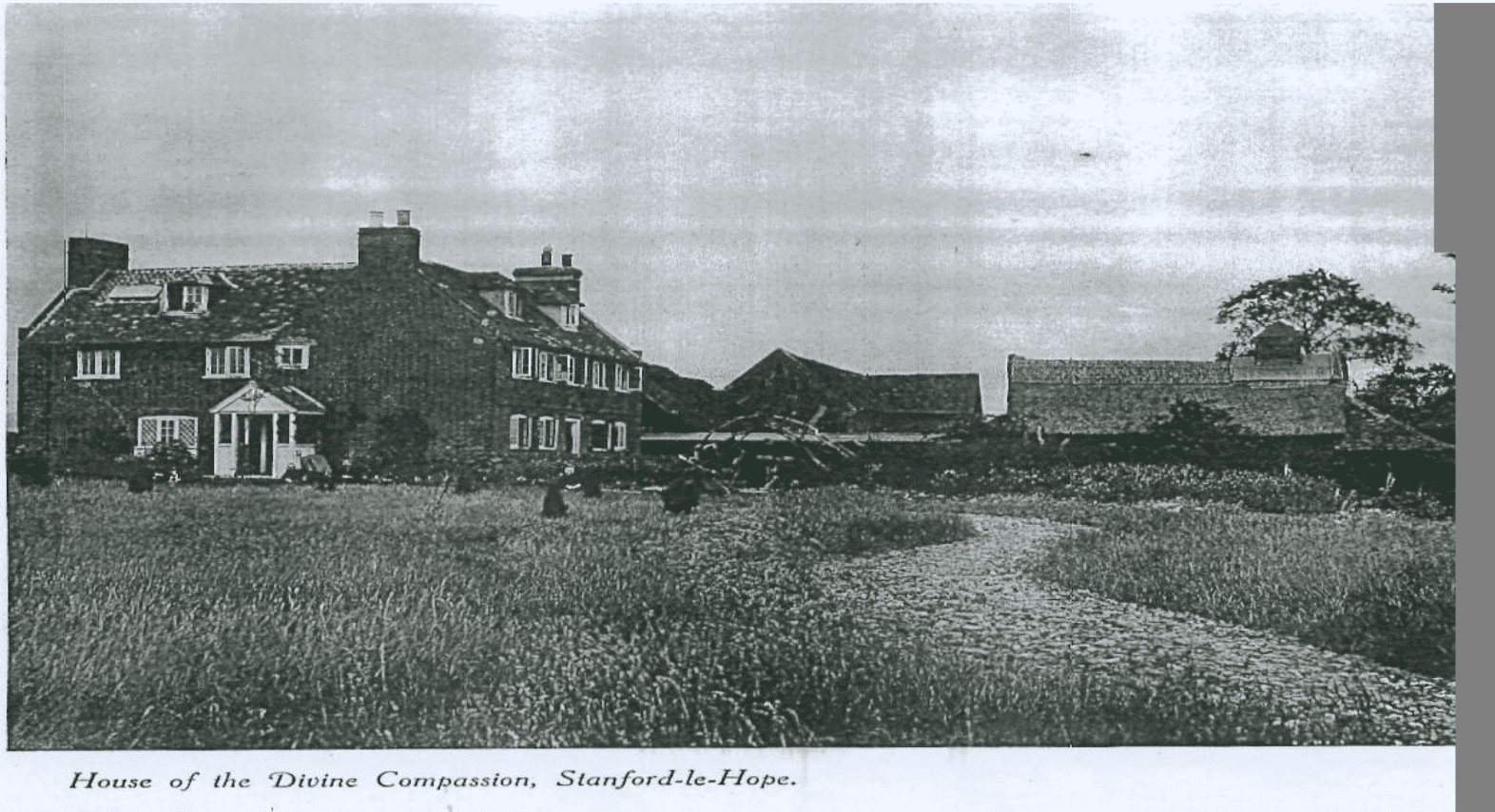
But here in Stanford one sect in particular seems to have bonded well with the residents and was known as ‘The Society of Devine Compassion’ and is remembered still by many of the older residents. They were a group of Brethren who housed themselves in the once Potters Farm sited off of Branksome Avenue between the years 1905 and 1947. The whole area is now a housing estate with no evidence of its previous being, except perhaps for a road named ‘Hope Avenue’. The brethren were often seen walking around the area in their sandaled footwear and wearing their customary black robe held around the waist by a white rope (Cincture) that hung to the right with three knots at its lower end a reminder of their vows—Chastity, Poverty and Obedience The farm was bought for the purpose of it being converted to use as a retreat, and its location from their base in Balaam Street, Plaistow made it easily accessible and not too expensive by the local train service.
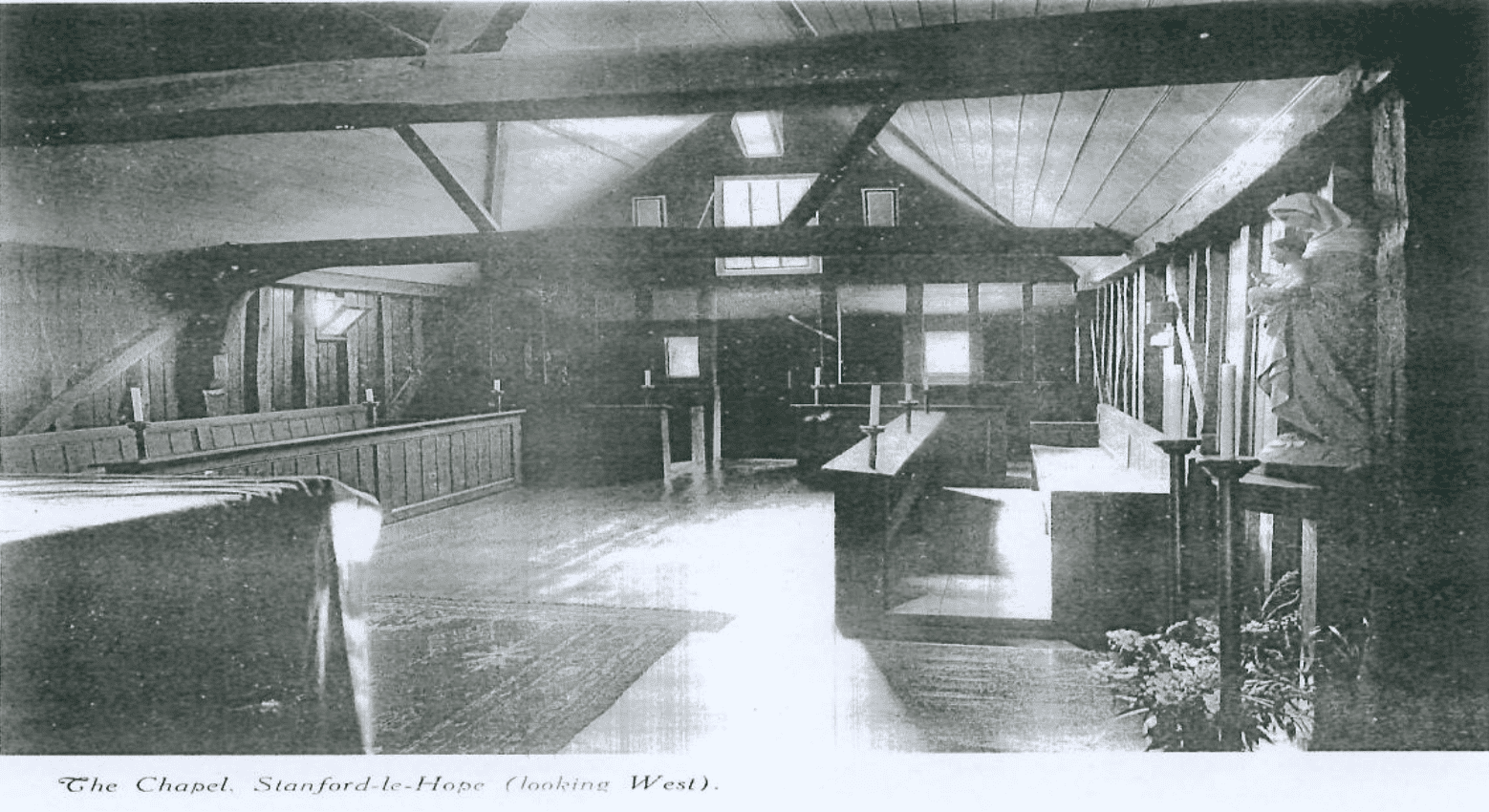
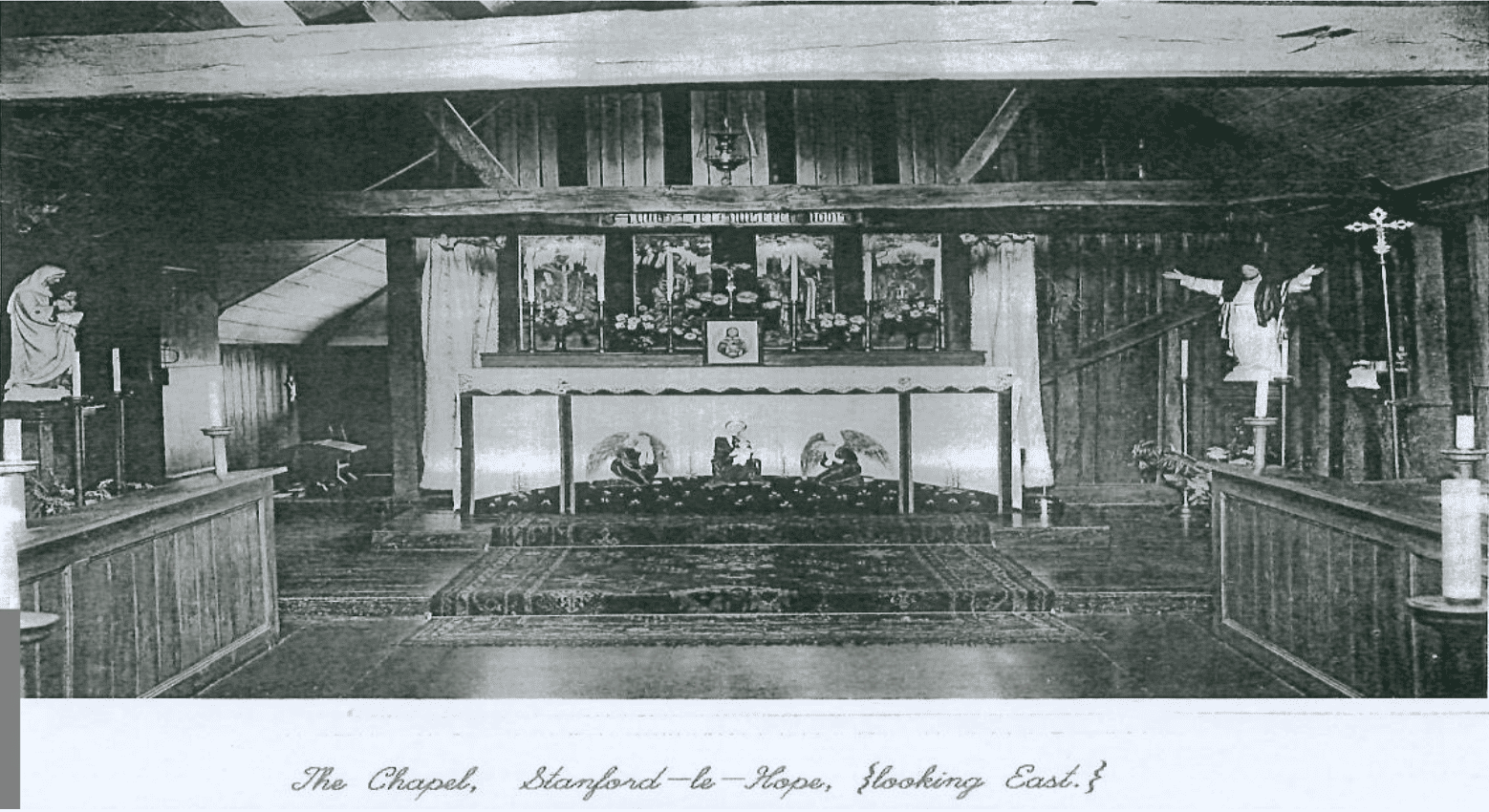
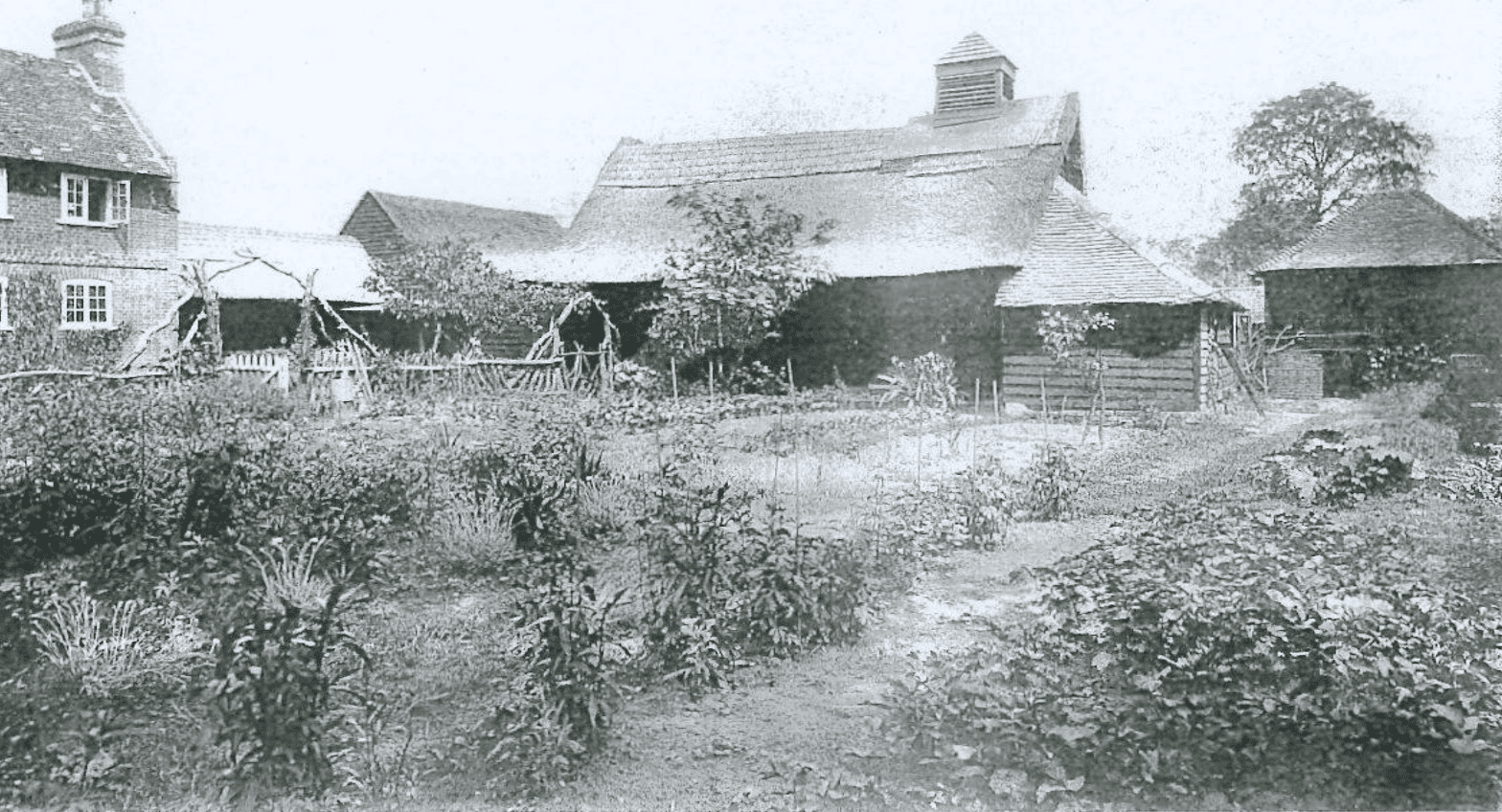
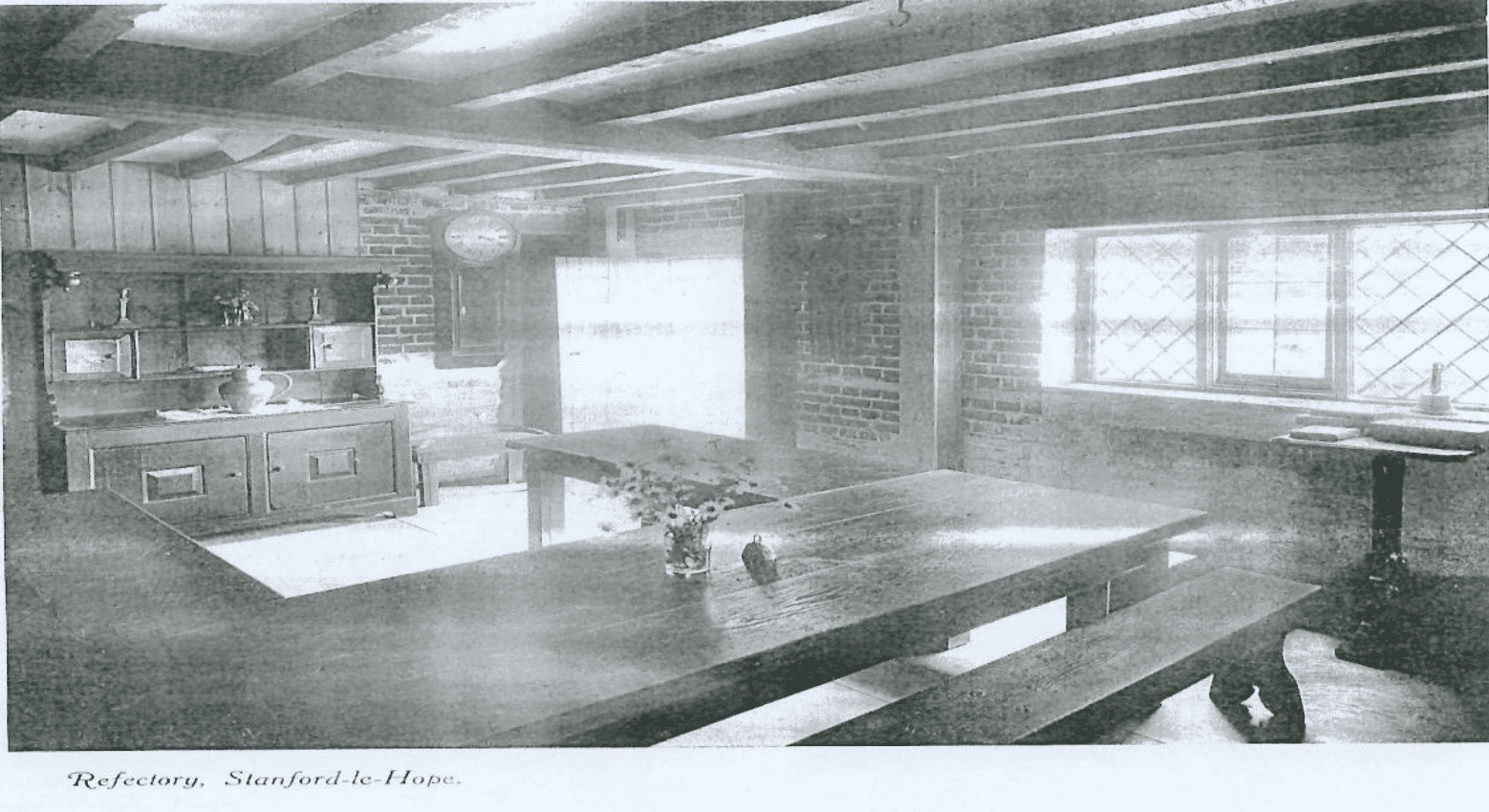
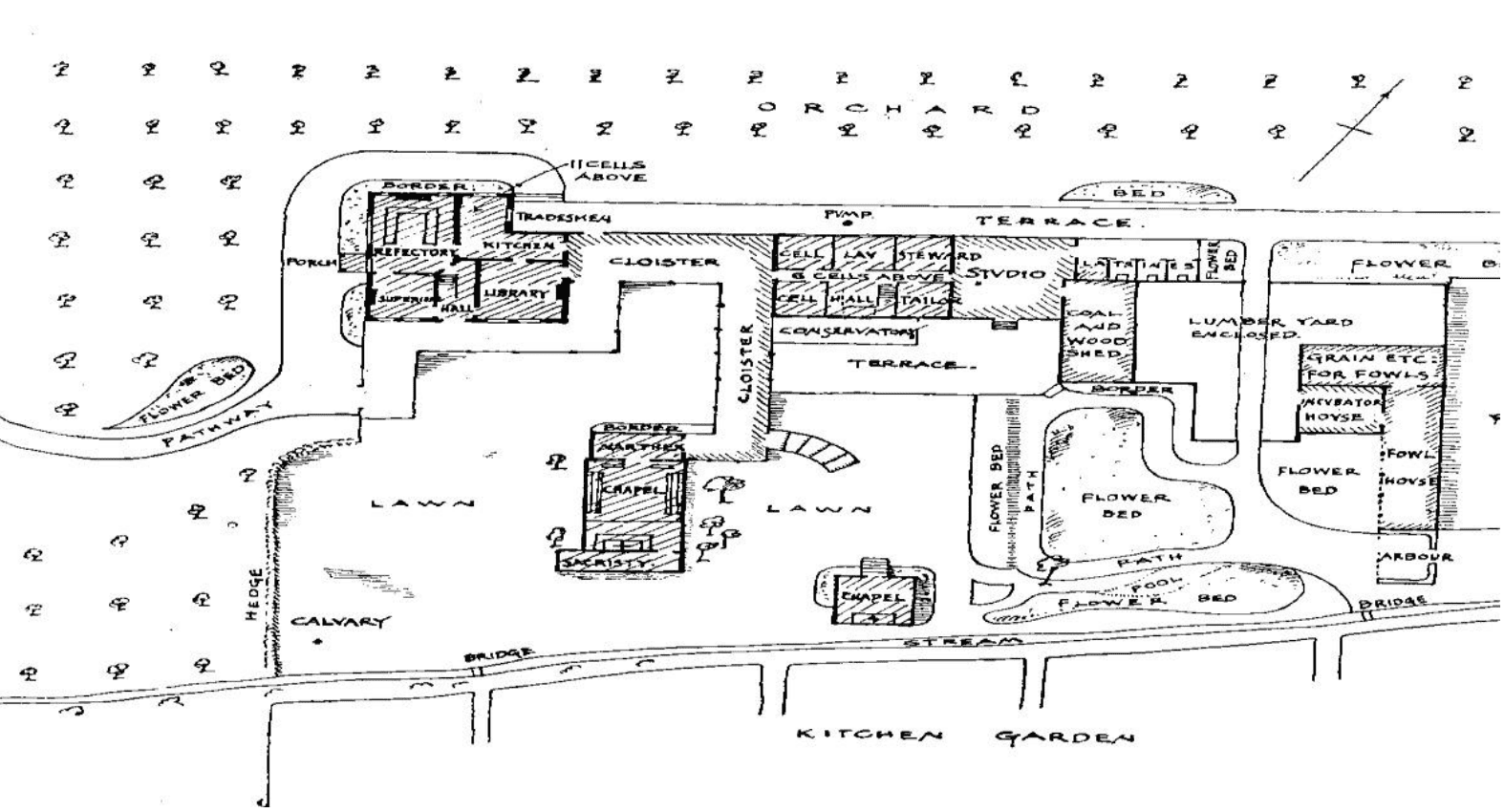
Here the novices of many orders were able to test themselves and be tested. The parish welcomed the advent of the community and the brothers of the society preached in the churches of the neighbouring parishes and the parish clergy in their turn greatly assisted in the work of the novitiate by giving addresses in their chapel. The ten acres of farm had many out-buildings along with the farm house, and the brothers divided their time between their cells, the chapel and work around the house. One of the out-buildings, a P a g e | 2 thatched wood cladded barn was converted to the use as a chapel with a small steeple at its top with a bell that would have been tolled during the day calling the brothers to prayer. All this surmounted by a wooden cross. The pig-sties were converted into greenhouses and a vegetable garden supplied the refectory table.
There were ducks and a small poultry farm that contributed its eggs for the Friday fare, the surpluses being sold to the local corner shops.
A quiet and secluded garden with lawns and flower beds had winding paths with a simple bridge spanning the stream. In one corner rising amongst the elms was a rustic Calvary. There had been no rebuilding, just conversions with all the work carried out by the brethren and helpers.
Much missionary work was carried out from here including the caring of the Leprosy sick in the hospital at Hangingfield and rest given to those who were tired out from their work in the missionary fields. Discipline was overlooked by the then superior, they being appointed by the retreat chapter. The purpose of the Society (SDC) are summed up in its definition; ‘A community of priest, decons and communicant laymen, banded together in common life of Chastity, Poverty and Obedience for the Gory of Our Lord. That members of the society are not by their constitution tied down to any particular work, they desire to obey the call of Almighty God wherever it may lead them. A great desire to share and sanctify the experience of the poor, to hallow commercial life, and to recognise the dignity of labour.
It would wish that all its activities might always be biased in these directions’. The Rule was taken to Lambeth Palace where it was signed by Dr. Benson, Archbishop of Canterbury.
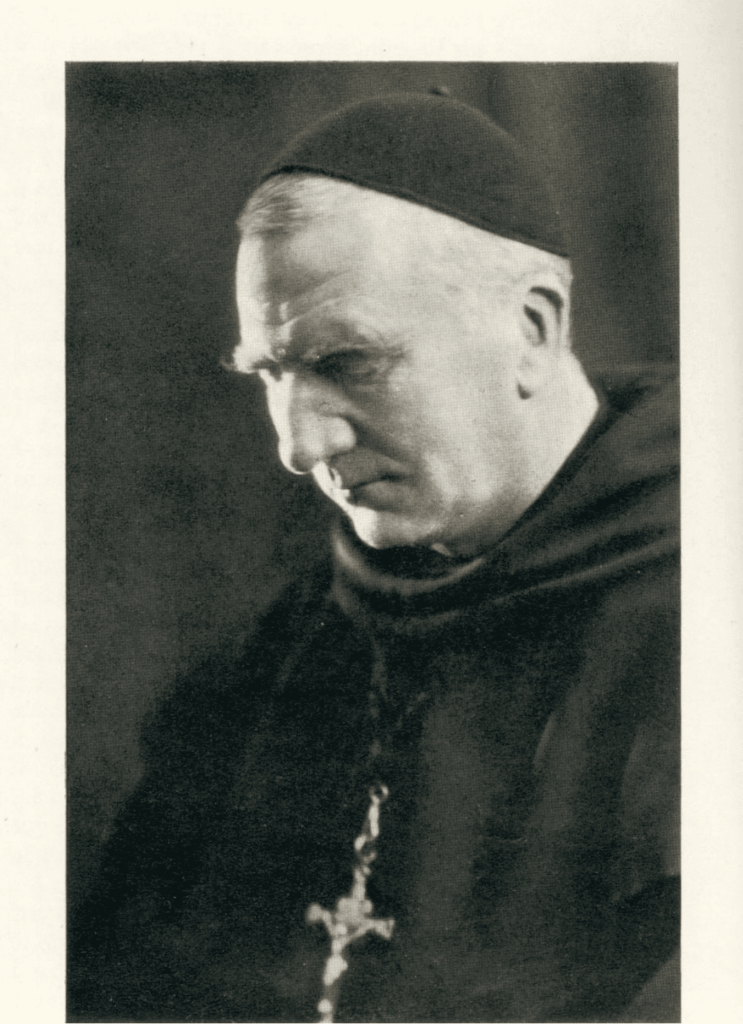
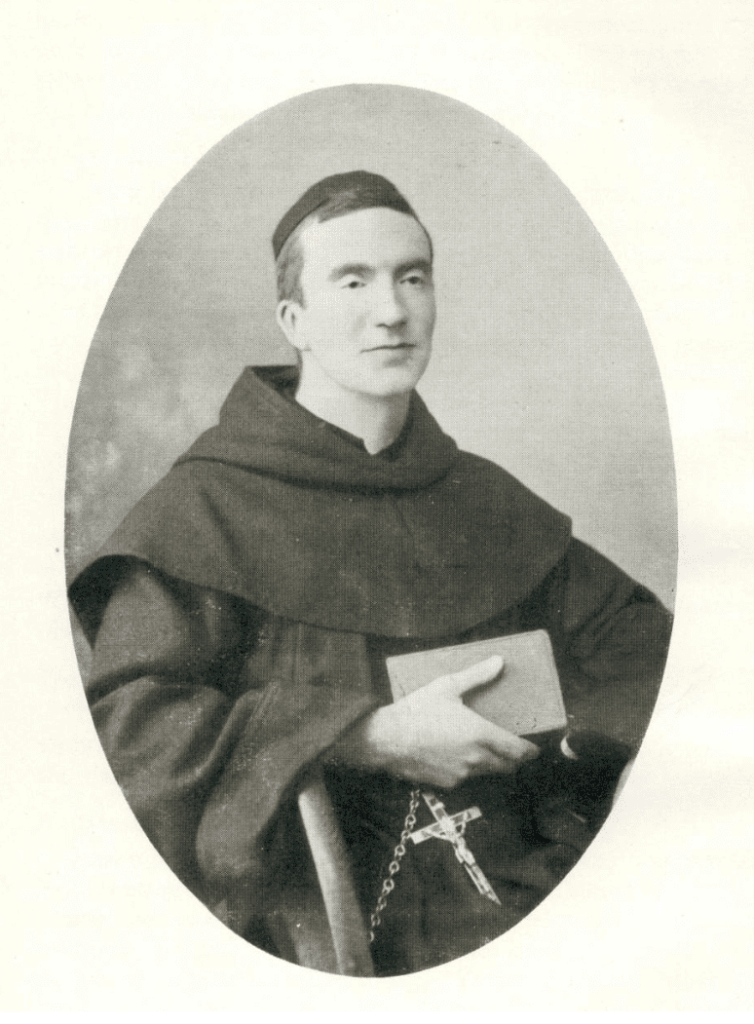
The SDC (which was monastic and Anglo-Catholic) is centred on three gentleman of the cloth
—James Granville Adderley (1861-1942) a Church of England clergyman and Christian socialist.
Rev. Henry Rivington Chappel ( 1868-1913)
Rev. Henry Ernest Hardy (1869-1946)
James Adderley, along with Chapple and Hardy, took his first vows in the foundation of the SDC in January 1894, but by 1897 he felt the need to ‘leave’ saying that as a roaming missioner he lacked the monastic vocation and took up a milder rule. He died on the 1st of June 1942 and his ashes were laid in the East of London Cemetery.
Henry Chapple was educated at Marlborough College and at Exeter College, Oxford where he took honours in Classics and Theology. It was whilst at a Retreat in Oxford he encountered the ideals of Adderley and on leaving took up residence at Oxford House Bethnal Green to work and live amongst the poor.
He became priest in charge of the mission district of St. Phillips in Plaistow and was better known as Father Henry, where he was greatly beloved. Father Henry died at the novice’s house in Stanford-Le-Hope in October 1913 aged 46 years.
Henry Hardy went to Keble College Oxford graduating in 1891 with a fourth in Theology. With no set religious convictions, ordination was his only interest, and it was only after the head of Oxford House visited the university looking for volunteers to work amongst the poor, did Hardy respond to the rule of life akin to that of St. Frances of Assisi—so cofounding the SDC. On June the 9th 1895 he was the first man to be ordained in that religious habit since the Reformation.
He adopted a biblical name and became known as ‘Father Andrew’ eventually becoming the last surviving member having fulfilled many years of religious obedience. On 31st of March 1946, Father Andrew died of Cancer; his burial took place at the East of London Cemetery attended by hundreds of devoted parishioners and friends.
The decline of the SDC in Stanford is hard to define but evidence seems to suggest that there was too great a fall in membership for it to continue in its then present form. The Second World War may have taken its toll for it was shortly after its end that the Stanford establishment closed with all the SDC activities being aliened to a similar sect— The Society of St. Francis–back in Plaistow.
St. Philips church in Plaistow was the spiritual heart of the Society’s work; a plain redbrick building whose walls were no longer red but grimey with the acid laden air and fog of the low lying district that had once been marshes, the waste land around formed a playground for the children. Father Andrew wrote to his mother; “Unemployment, poverty, disease, dirt and drunkenness are rife.
There is often real starvation. He goes on to say: “It makes one feel very sad to hear the little children praying ‘Give us this day our daily bread’ when one knows there is nothing at home for them. I have found families without even the light of a candle sitting silently and starving in the dark’. Since the day that the Society presented and had its rule accepted, it has gone on to imitate the Incarnate life of Our Lord engaging itself in parish work and living the life of those around them.
They have gone out to the more active work of preaching and conducting missions by having workshops that repaired clocks and watches and running a small printing press along with sharing the discomfort of those who had no choice but to be poor. In 1896 the Community moved from its original quarters in Meredith Street to another larger house in Balaam Street where it remained to the end.
Active work began to develop with a strong and steady pace; the brothers undertook the chaplaincy of the East of London Cemetery (where they themselves had a burial plot) and were kept very busy throughout the smallpox epidemic of 1901 and 1902 on the hospital ships moored in the Thames as well as the isolation hospital on Dagenham marshes. With the coming of the Second World War, Farther Andrew, being the Superior at the time, knew for certain that his duty was to stick to his post in East London and the community continued to minister to the bodily and spiritually needs of the people of Plaistow.
However, the strain proved too much for Father Andrew and he died peacefully on 31st of March 1946. Bomb damage to St. Phillips Church and the surrounding area meant that services had to be held in other loaned premises. The Community House was declared unsafe to live in, one of its outside walls having been blasted away, but the Franciscans clung to it and eventually it was rebuilt. The decline in numbers meant that other work formally undertaken had to be given up.
For a short while the friary at Stanford was taken over by the Brotherhood of the Holy Cross; the St. Giles home at East Hanningfield passed into the care of The Sisters of the Sacred Passion, and no longer could the SDC act as chaplains to the East of London Cemetery. With the death of several members, the Society was reduced to two aged Fathers and by 1952 the SDC had died out, all its activities being taken over by the Society of St. Francis. Brown habited friars superseding those in black.
A particular community coming to an end and its work being continued by another community with the same spirit and ideals. The statue of the Little Poor Man of Assisi still looks down on the enclosed garden of the community in Plaistow to this day.
-

- brethren of branksome avenue 10
-
- brethren of branksome avenue 3
-
- brethren of branksome avenue 4
-
- brethren of branksome avenue 7
-
- brethren of branksome avenue 9
-
- brethren of branksome avenue 11
-
- brethren of branksome avenue 12
-
- brethren of branksome avenue 13
-
- brethren of branksome avenue 8
-
- brethren of branksome avenue 6
-
- brethren of branksome avenue 1brethren of branksome avenue 5
42 Balaam Street
Balaam Street to me somehow had a ring of familiarity to it and it wasn’t until I consulted a street map that I remembered that I once lived in the area. It’s a main thoroughfare off the Barking Road in Plaistow, so when in my research I found 42, Balaam Street involved, the yearning to learn more made the need to visit the place a necessity. I had previously had a telephone conversation with one of the residents—Brother Julian—so I knew that even without a prior appointment I could just ‘knock on the door’ and be made welcome.
So it was that on a very nice sunny day I motored to Plaistow looking for Balaam Street and after a few false starts found number 42. It was the most inconspicuous building imaginable tucked alongside the local Leisure Centre with an image that you wouldn’t give a second glance to, but there it was number 42, Balaam Street. It gave the appearance of its front once having been a shop- –which I thought strange at the time. A ring at the front door bell soon had me introducing myself to this petite of a lady who I latter understood was one of the volunteers who politely asked ‘How can I help’. I explained the purpose of my visit and apologised for this unannounced call to which she replied that I was most welcome. She explained to me that she was part of the ‘Helping Hands’ organisation that was housed within the building and it was run in conjunction with The Society of Saint Francis—a religious order led by Brother Julian, who at that time was out on a mission but would be back latter.
The area we were sitting was informally furnished and was, I suppose, considered the ‘reception’, some stairs to our right led to a basement which I understand housed the kitchen and dining area.
Another stairway more to the front of the building seemed to give access to some upper floors. A recent refurbishment had added a form of conservatory beyond which was the garden. There were a couple of gentleman milling around on the patio who I latter learned had recently returned from having cut the overgrown grass of an elderly ladies back garden—a task my lady explained being the most common ‘help’ request at this time of year. But this was what ‘Helping Hands’ was all about, helping people who needed help. It was all strictly voluntary.
Would I like to see the chapel? From the patio, a narrow winding paved path led us through what I can only describe as a miniature jungle of tall shrubs and ferns all interlaced with Bamboo Plants with stems of considerable thickness. It even had that damp atmosphere associated with jungle like P a g e | 15 vegetation. Periodically small ‘lay-byes’ revealed shrines that embraced religions of other lands (Moslem, Sikh, Buddhist) alongside of which were bench seats for quiet reflection.
The most outstanding significance to it all was its quietness, so so quiet and peaceful, and yet here we were in the midst of one of the busiest congested streets of East London. At the paths end you were met with this vast open grassed clearing scattered with garden seats within an air of solitude— unbelievable. It was hard to believe the quietness of it all.
To one side of the clearing was a chalet type building of some length which I understood housed the chapel along with living quarters accommodating four residents in single rooms. These were latter explained to me as being occupied by men who, on the streets, were finding things hard and difficult so were offered this accommodation until things became better for them. They usually stayed for two years or so.
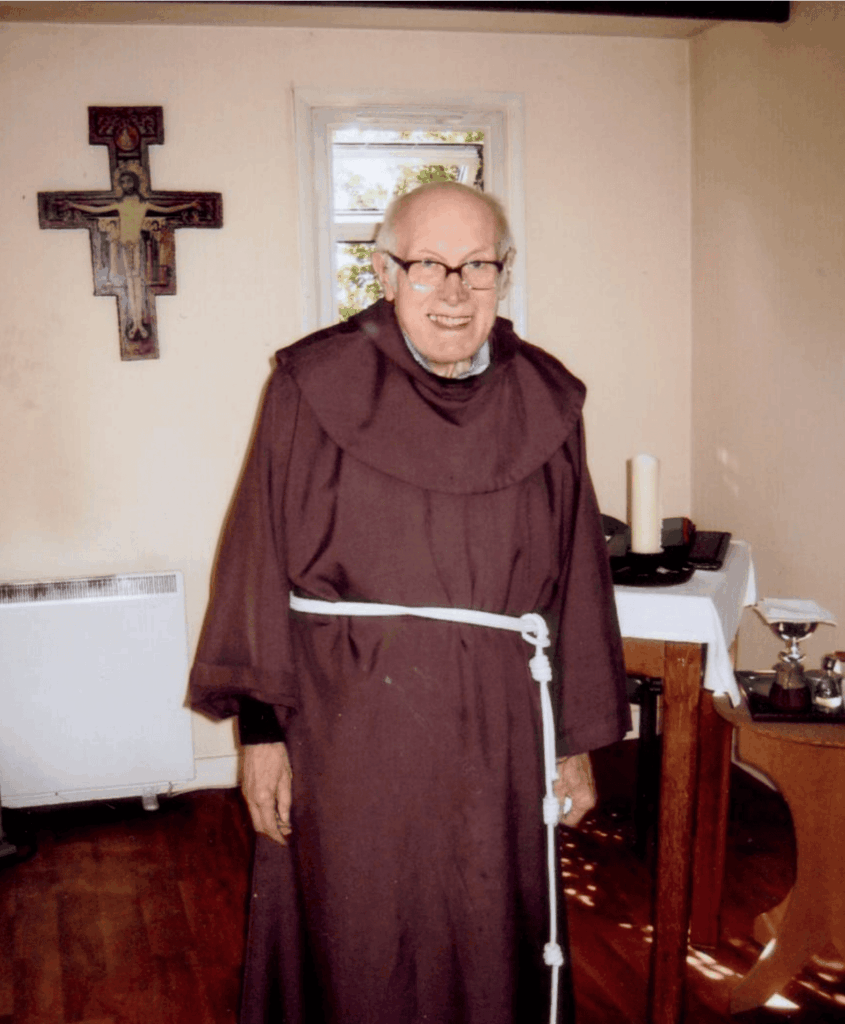
The chapel was simplicity in itself, a beamed ceiling contrasted well with the dark laminated flooring and the Magnolia coloured walls reflected the light from the full length double glazed windows. A small white clothed table was positioned at an angle in the far corner on which was placed a Bible along with a large white candle.
Grey upholstered chairs were positioned in an arc around the room and a further smaller table catered for the communion set. All very quiet and serene.
On returning to the main building I was introduced to Brother Arnold, an 88 year old gentleman with 57 years of reverence and service to the poor. He explained to me the levels of pastor recognition of the Habits worn—White, Brown, Black— something I need to learn more of. We spoke of the Franciscan Monks at Stanford-le-Hope and his life generally over the years. He introduced me to some titles of books that would be of interest to me in my research ( Call of the Cloisters and The Life and Letters of Father Andrew) and together we walked back to the clearing for him to show me his ‘cell’ situated in the chalet alongside the rooms of the other four gentleman residents. On leaving we/he agreed to gather some research material in readiness for my next visit.
Preparing to leave I met up with Brother Julian having lunch and we discussed various aspects of my research so far. Whilst talking of the Stanford episode he asked one of the helpers if he would go to a room above and bring down a framed picture for me to see, it was of some of the monks at Stanford—all named. I was totally flabbergasted. I couldn’t believe it. Absolutely fantastic.
In our conversation, Brother Julian indicated to me that the society had a burial plot at the East London Cemetery which wasn’t too far down the road from where we were, and whilst in the area I should take advantage of viewing it, so saying my goodbyes that proved my next stop.
Throughout my research and readings one gentleman kept coming to the fore, his name, Henry Ernest Hardy (1869-1946). His religious name being Father Andrew, an Anglican friar and Church of England clergyman. He was born in India the fourth son of an Indian Army Colonel. He spent his childhood in India and after his fathers retirement persuaded his parents to send him to art school in Bristol.
After two years there he went in 1888 to Keble College Oxford graduating in 1891 with a fourth in theology—his health not being too good at this time. He had no real set convictions and thought only vaguely in terms of ordination until he met up with Winington-Ingram then head of Oxford House in Bethnal Green who was looking for volunteers to serve the under- privileged in London’s East End, a challenge he accepted so took up residence in Oxford House.
Winnington-Ingrams predecessor at Oxford House—James Granville Adderley—had ideals that run parallel to Hardy’s and following a retreat at Pusey House, Oxford, they were joined by a third enthusiast—Henry Rivington Chapple—and the three pledged themselves on the 20 of January 1894 to a rule of life accompanied with religious vows of Poverty, Chastity and Obedience. Hardy then completed his training for the priesthood at Ely Theological College before joining his companions at Plaistow (East London) where they took charge of the mission church of St. Phillip. The new community became known as The Society of the Divine Compassion (SDC) taking on a way of life resembling the followers of St. Francis of Assisi.
After Adderley’s departure in 1897, and Chapple’s death in 1915, Father Andrew—as Hardy was now universally known—became the dominant character in the SDC community and was famed for his skills as a confessor and retreat conductor. He was a prolific author having eight books of poems and sixteen works in prose published in his lifetime.
Now established as the priest in charge of St. Phillips, his parish suffered badly in the blitz, the church being wrecked twice. This wartime ordeal taking a toll on his health. He was diagnosed with Cancer in August 1945 and died unmarried on 31st of March 1946. His body was borne in procession through the streets of his parish for burial in the East London Cemetery. As a bishop remarked after his death; ‘He was a great man such as God sends us—only one or two—in a generation’ A further P a g e | 17 note in the Telegraph newspaper quoted of him being ‘The priest who made sense of religion’. He was the first member of the Church of England to be ordained priest wearing the monastic habit.
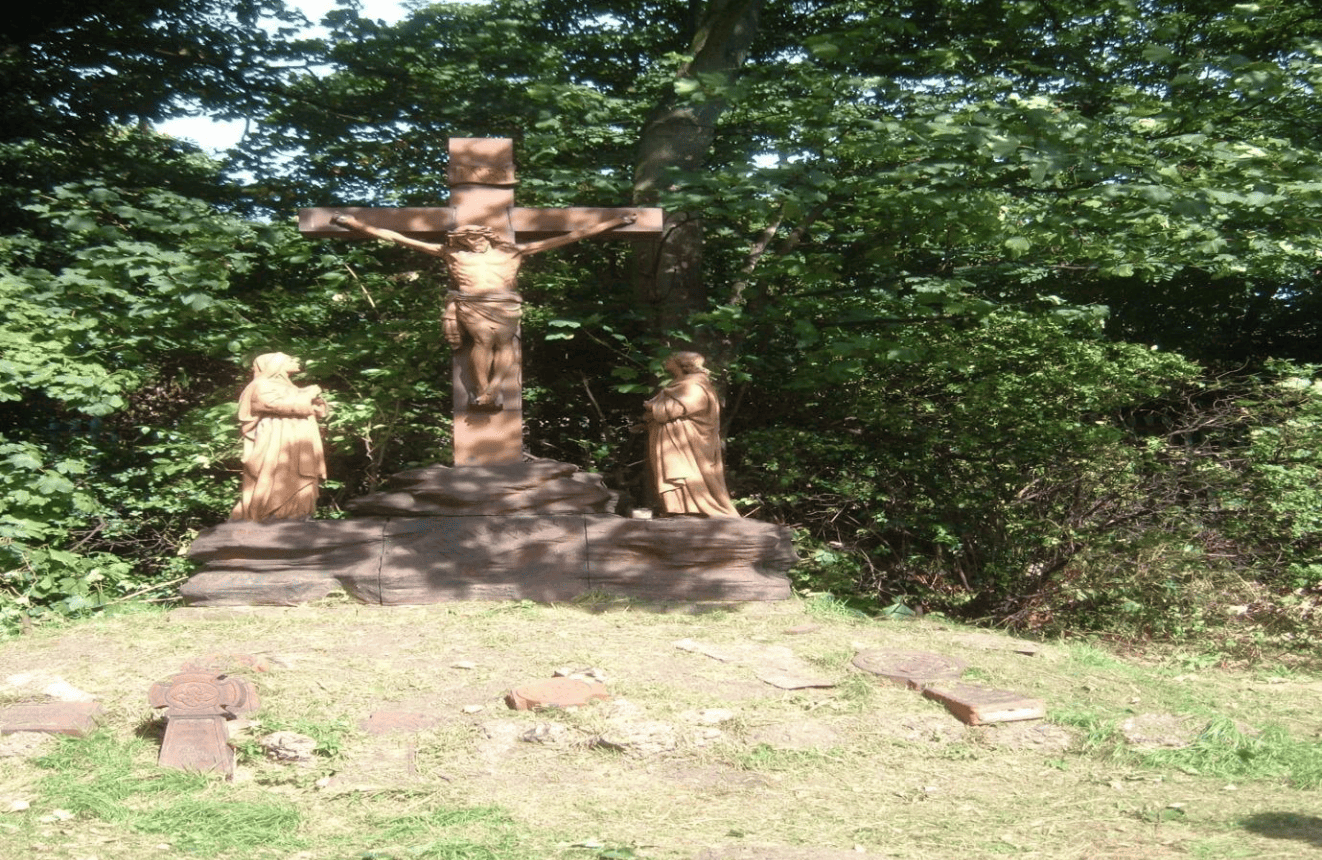
Leaving Balaam Street and within a short while I found myself entering the gates of the East of London Cemetery, something I remembered as being the resting place of many people I had known, and on making enquiries was verbally navigated to where the grave of Father Andrew was considered to be—but it took me over thirty minutes before I eventually found it. A great terracotta coloured Calvary stood before me on a mound of soil that made it supreme, and there at its foot numerous small rugged stone crosses one of which, along with other Brothers of the Divine Compassion, was Father Andrew. There he lay amidst the poor of Plaistow to whom from the 1890s until his death, he had devoted his life.
An obituary in the Times newspaper for October 1913 tells us of another gentleman, saying that; “At the novice’s house of the Society of the Divine Compassion, Stanford le Hope, the death took place of the Rev. Henry Rivington Chapple better known as Father Henry, aged 46. For some years he was Superior of the Brotherhood. He was remarkable as a mission preacher and conductor of retreats. These duties, added to a daily life of devotion and self sacrifice, overtaxed his strength” Further reading tells us that here too was a man held with the utmost regard. So I guess Father Henry must be at rest at the East London too.